

I Asked Magazine Editors Who Lived It What They Thought of The Devil Wears Prada
Like Miranda, they didn't mince their words.

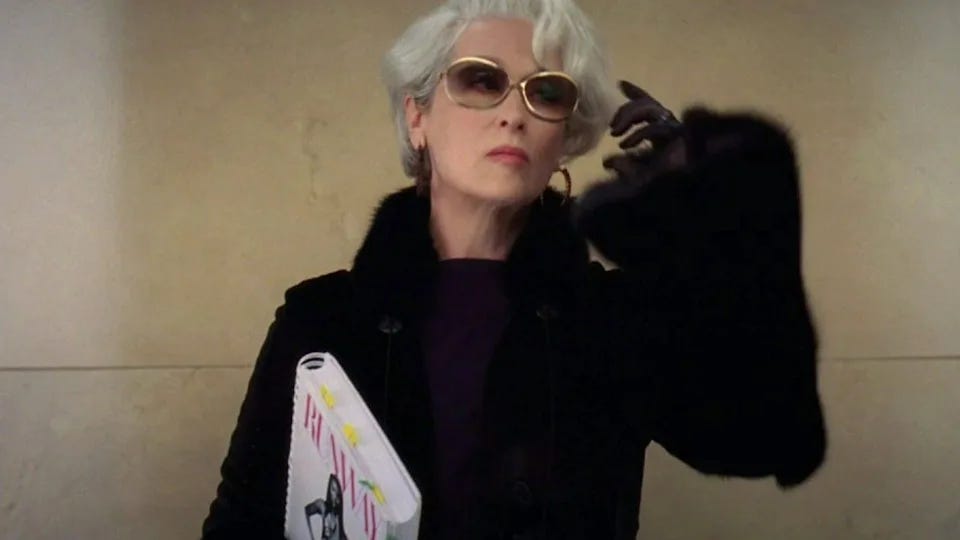
I wrote recently about starting my career at Vogue Australia—accidentally, in the most Devil Wears Prada way possible. So you bet I was in the cinema on May 1 to see The Devil Wears Prada 2. And I loved it.
You had to be there.
In the glossy, glory, gory days of magazine publishing.
I promised you a sequel, so here goes…
In the twenty years between films, the landscape has shifted beyond recognition. Print gave way to digital, social media became a force, video threatened to replace words, and now it’s all branded content and commerce. Shrinking budgets, dead mastheads, getting fired more times than you can count—yes, even by text, like Andy (and I)—has sent us running for cover. Or rather onto Substack—where have you been all our lives?
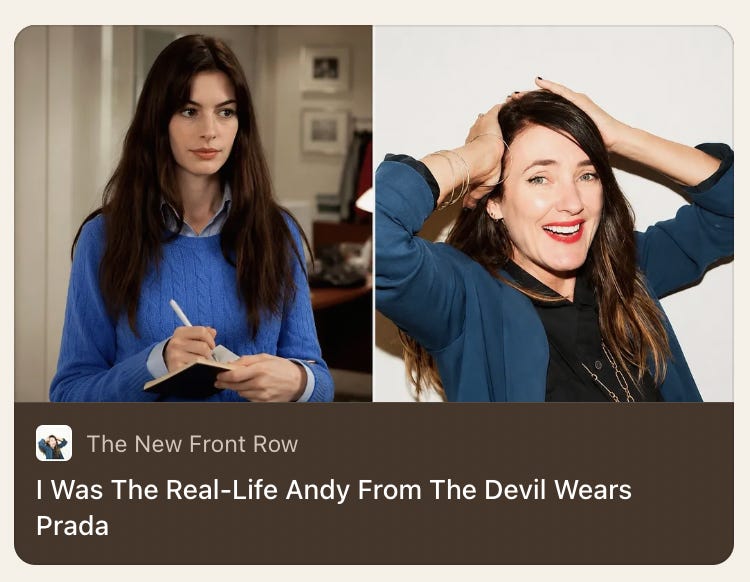
The Devil Wears Prada 2 captured it perfectly: Runway is no longer an untouchable empire but a contested asset fighting for relevance and revenue.
In my last piece, I alluded to meeting a bit of a devil at my peak—as executive editor at Harper’s Bazaar New York, working under the tough and often terrifying Glenda Bailey. We were painfully aware we played second fiddle to Vogue, so she demanded big-picture ideas—coups, she called them—and God help you if you turned up empty-handed.
We put Rihanna in a shark’s mouth, transformed the Empire State Building into a cinema for Bazaar‘s 150th, and I wrangled Karl Lagerfeld onto a private plane with Japanese artist Takashi Murakami’s octopus to riff on why you need eight legs to survive in the cutthroat world of fashion.
GB, as we called her, was the last of these OG real-deal editors, and I take my hat off to her. She summoned me into her office once, where she had handwritten “well done” on a piece I’d written. “You enjoy that,” she said. And I did, it was like being sent to the principal’s office and told you’d won an award.
In the movie sequel, Andy secures an exclusive with elusive billionaire Sasha Barnes—played by Lucy Liu—on her divorce and new romance.
Glenda would have called that a coup.
In something of my own coup, I asked some big-name, badass editors for their unfiltered gut reactions on The Devil Wears Prada 2.
Like Miranda, they didn’t mince words.
Farrah Storr
Things Worth Knowing | Substack
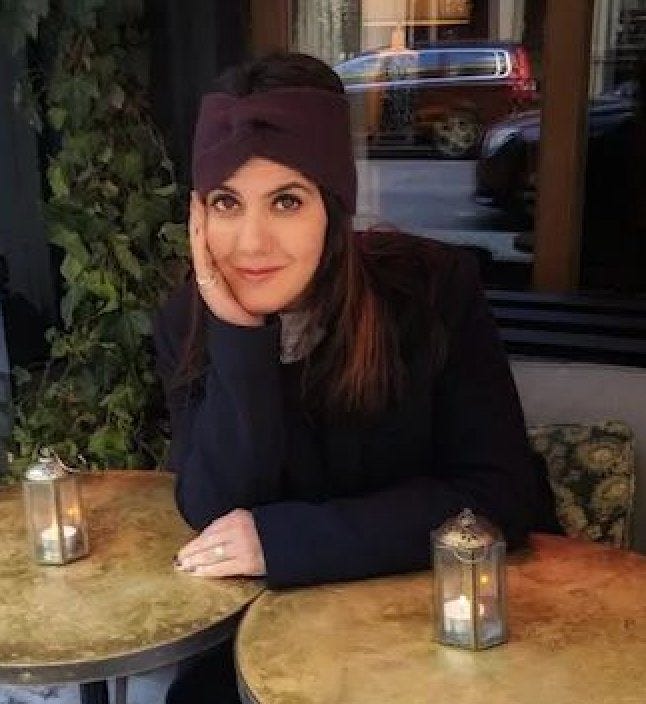
Farrah is a dear friend. I met her when she was brought out to Australia—she’s British—to helm the features department of the women’s magazine we were working on. She went on to become EIC of Cosmopolitan, then ELLE. She is an MBE, has a bestselling book (The Discomfort Zone), and is now spearheading Substack’s international writer partnerships while publishing her own newsletter, Things Worth Knowing.
Her gut reaction to DWP2
The film perfectly captures the sad, inevitable decline of magazine journalism. As someone who became an editor around 2012, just as it was all going south, David Frankel has done a brilliant job of capturing the bruised egos, the desperate last clutches at power, and the cynicism of the clickbait age.
What she misses about glossy mags
When magazines were good, they were the best place on earth to cut your teeth as a writer. I got to go undercover at cosmetic surgery practices, sit in the front row at Chanel, and interview hundreds of women about everything from heartbreak to reinventing yourself at 60. I miss the creativity, the people, the hours spent writing cover lines. I don’t feel sad it’s over. I feel grateful it happened.
What she definitely doesn’t miss
The constant anxiety about paper thickness, the fear of circulation decline, and the layoffs.
Zara Wong
Screenshot This | Substack
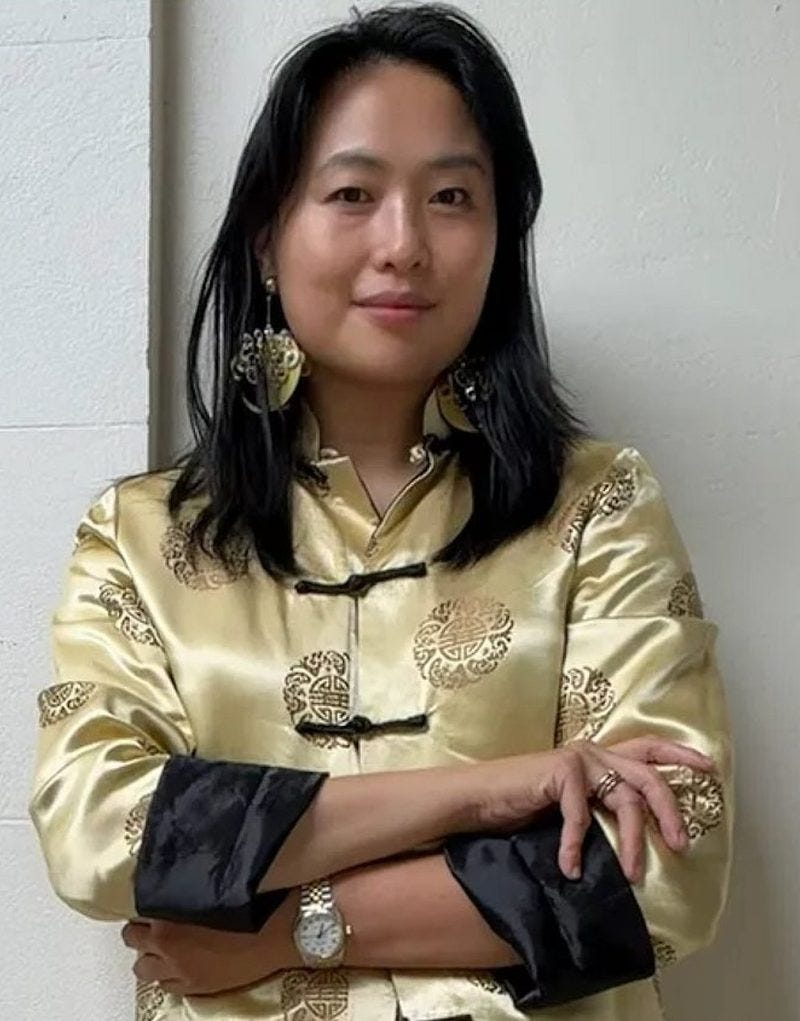
Zara and I share a hometown (Sydney), mutual friends, and a history at Vogue Australia—she was Fashion Features Director many moons after I’d left the building. Coveted for her incredible style, she brings that influence and her editor’s eye to Screenshot This, now ranked among the top fashion publications on Substack.
Her gut reaction to DWP2
It made me laugh and raise my eyebrows that they satirized so much of what has actually happened.
What she misses about glossy mags
The time. I think by the time I got there, it was speeding up already, but there were moments where we could spend a little more time and effort on a really creative—and commercial—project.
What she definitely doesn’t miss
Being paid peanuts.
Kate Betts
Editors@Large | Substack
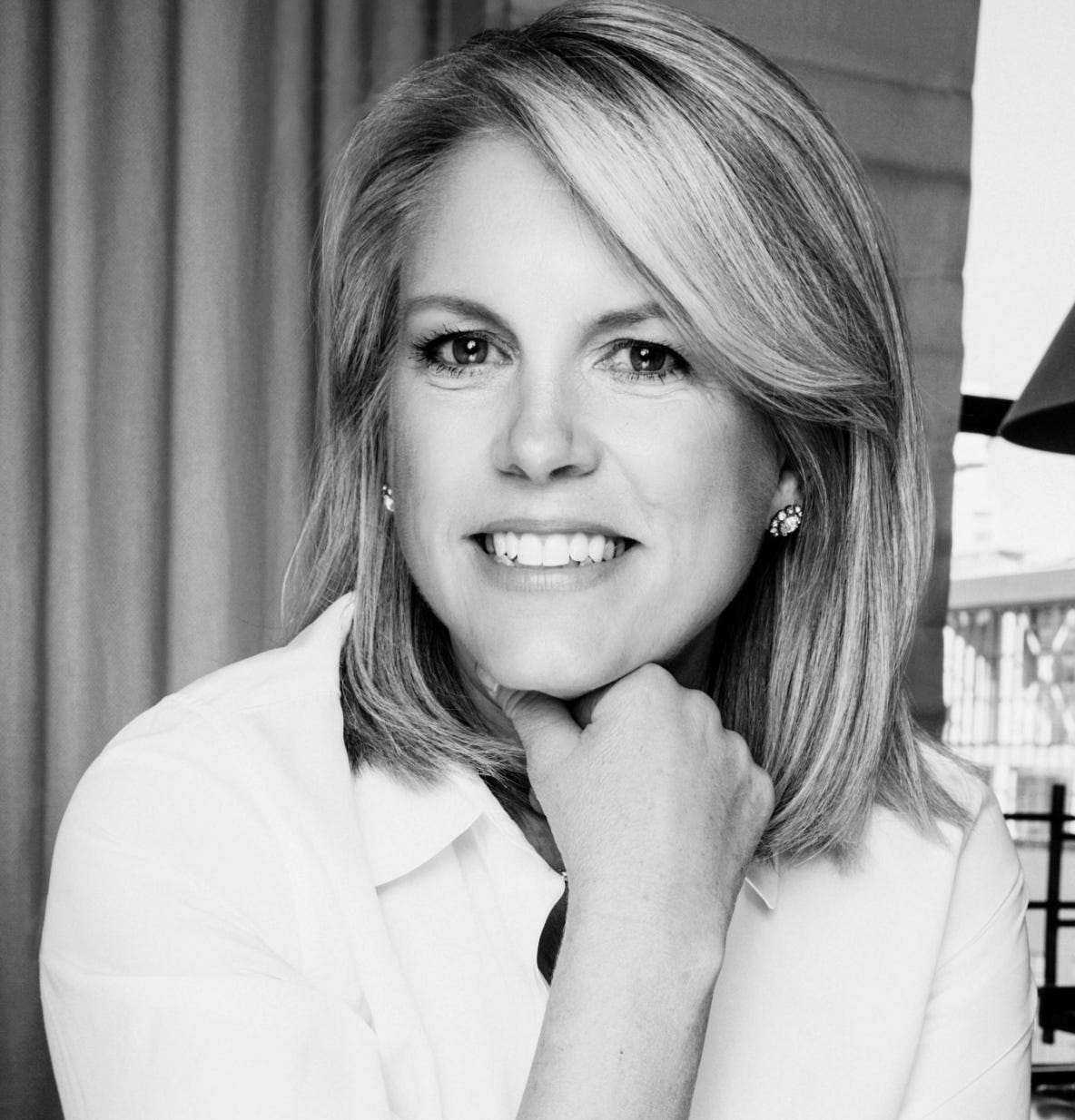
I’ve admired Kate Betts my entire career. She was deputy editor at US Vogue—second in command to Anna Wintour—when I was being baptized into this world as assistant to the EIC at Vogue Australia. When I mentioned to my then editor, Marion, a friend of Kate’s, that maybe she’d give me a job at Harper’s Bazaar in NYC, where Kate had just become editor, Marion snorted: “Kate will eat you alive.”
Fast forward 15 years. I made it to New York, and to Bazaar—and eventually got my Kate Betts moment, interviewing her over tea in TriBeCa about her memoir, My Paris Dream. She didn’t eat me alive. Kate now co-writes the must-read Editors@Large with fellow Vogue veteran Michael Boodro—fashion, design, art, books, and culture through the eyes of two tastemakers who’ve seen it all.
Kerry Pieri
Why Not? | Substack
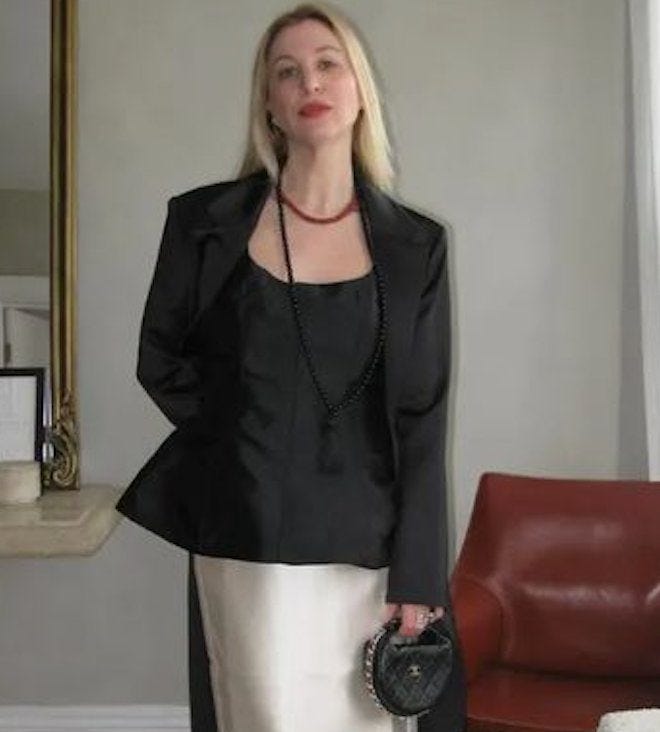
I met the stylish and talented Kerry—she’s actually a trained fine artist—when she was the digital fashion and features director at Bazaar, a role she held for a decade, and I was on the print side. In addition to showing her art and inspiring women’s wardrobes, she writes Why Not?—a fashion, shopping, interiors, and lifestyle newsletter that asks life’s most elegant questions.
Her gut reaction to DWP2
I promised my sister I’d wait to see the sequel, but I did rewatch the original. It actually does make me feel emotional. There are so many aspects of it that ring true to the time.
What she misses about glossy mags
Just the idea of having budgets to create these beautiful sets—to really dream up incredible stories that you could actually shoot and create using whatever model you chose, getting all the looks you wanted. Having that kind of access really only happens at magazines, and that is such a beautiful thing.
What she definitely doesn’t miss
I never had a terrorizer for a boss, which is a blessing—and I know not many in the fashion industry can say that. I was always very lucky and inspired by the women I worked for. The magazine world is so different from even the early 2000s.
Laura Brown
All The Cool Girls Get Fired | LB Media
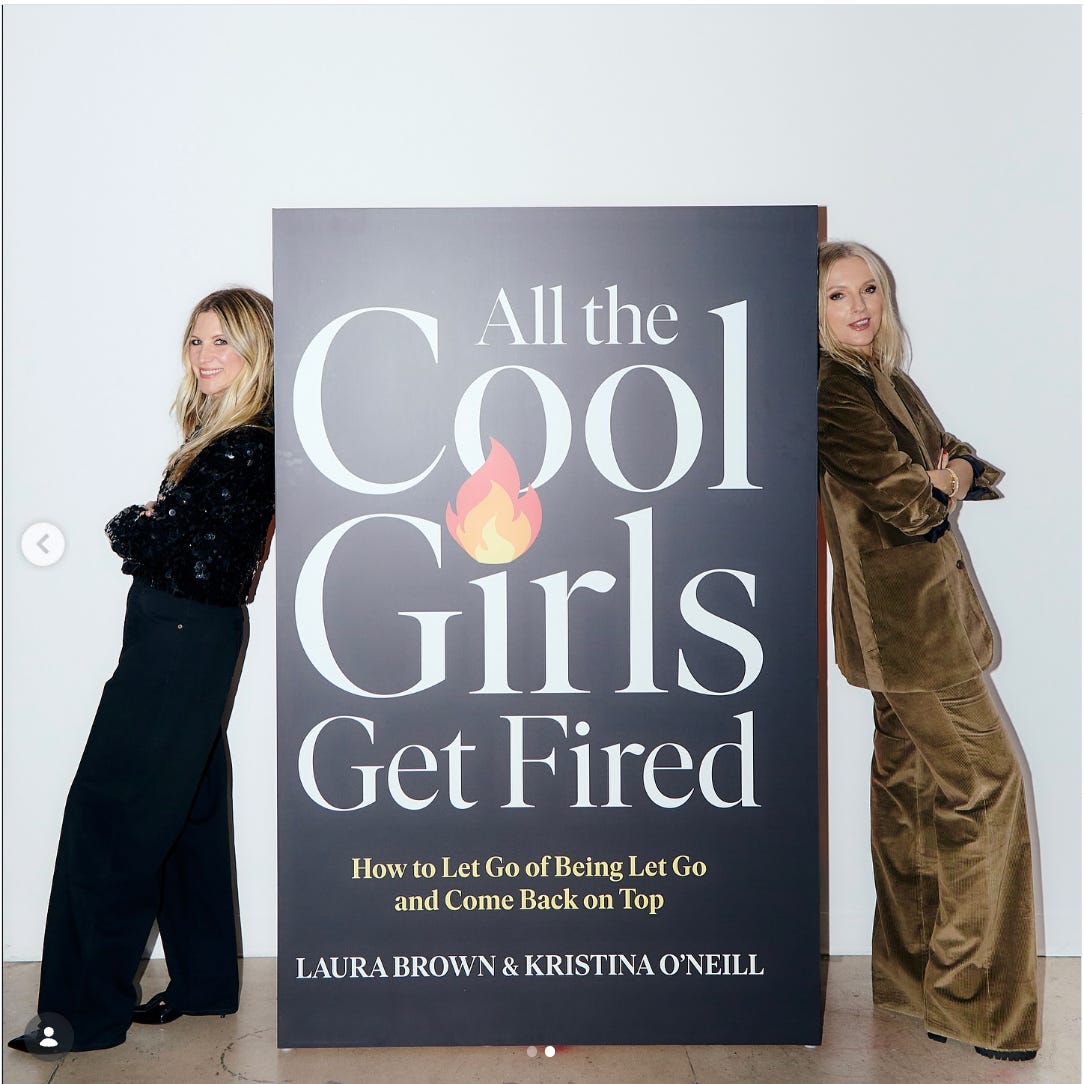
Laura and I were born in the same year in the same country. I watched from the sidelines in our native Australia as she became a powerhouse in New York: senior editor at W, executive editor at Bazaar, and then the EIC of InStyle. When I moved to New York, I reached out, figuring she’d never reply. In typical LB fashion, she wrote back: “G’day Koala, welcome to NYC—yes, let’s get a drink.” Fifteen minutes later: “Actually, send me your résumé and come in tomorrow.” She gave me my start at Bazaar for which I am eternally grateful. When Laura was fired from InStyle—those damn shrinking budgets—instead of slinking off, she turned her Instagram comment “All the Cool Girls Get Fired” into a bestselling book—co-written with former WSJ Magazine editor Kristina O’Neill—a movement and a brand.
Laura shared her take on The Devil Wears Prada 2 with The New York Times here.
Valerie Monroe
How Not to F*ck Up Your Face | Substack
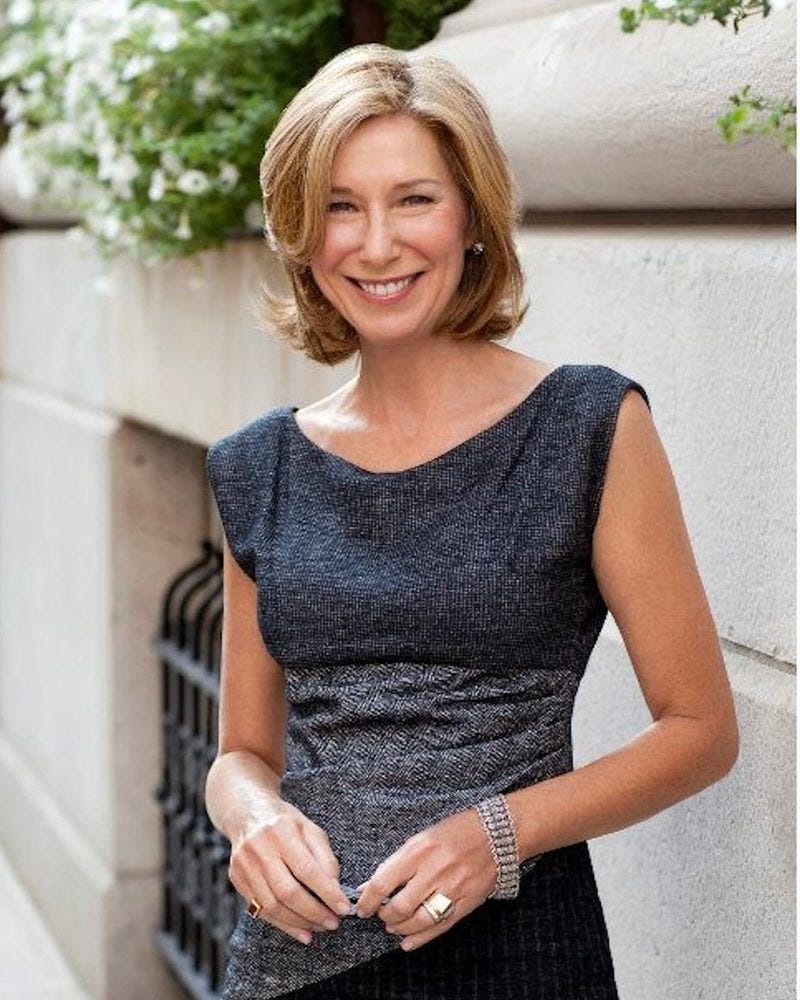
I don’t know Valerie personally, but we share a history at Hearst and in Beautyville. For 16 years, she was beauty director at O, The Oprah Magazine, where her monthly Ask Val column was followed by millions. Her brilliantly titled How Not to F*ck Up Your Face delivers the same: philosophical, practical, deeply humane guidance for anyone who’s ever looked in a mirror.
Her gut reaction to DWP2
I saw the movie recently in Tokyo, where the audience is always extremely quiet, so my snorts and other expressions of disbelief and (mild) disdain might have been a little disruptive. Streep flying coach? And asking for Champagne? C’mon, just dumb.
What she misses about glossy mags
The scenes of over-the-top luxury reminded me of my beauty director days at O, The Oprah Magazine—so luxurious that I now have a hard time believing they were real. What I miss most is working with the brilliant women who populated the magazine industry and who always made me feel like the work we were doing was actually a service to our beloved readers.
What she definitely doesn’t miss
The message about what’s happened to mass media journalism is accurate, the portrayals seemed cartoonish—or maybe I just can’t believe Anne Hathaway’s portrayal of a serious journalist, which seems to involve sitting back in every chair with her arm thrown over the side.
Sigourney Cantelo
Beauticate | Beautiful Inside Podcast
Sigourney and I go way back to the mid-noughties when we worked on the same women’s magazine with Farrah. She was glamour personified—it was no surprise she was the beauty editor. She went on to become Beauty and Health Director at Vogue Australia, a role she was born for. Then she did something brave: she left her dream job to build her own thing. Beauticate is a multi-platform beauty and lifestyle destination that reaches over 1.3 million people a month. When I asked Siggy for her DWP2 thoughts, she went one step further. She filmed a video.
That’s all.
I was crazy about following Kate Betts career! Love seeing her here in your column — and on Substack.
Love the look back. Those were indeed wild, crazy but also amazing days!